

Students from the master course on Cooperation and Cooperatives presented their research at the ICA CCR Research Conference in Helsinki 2025
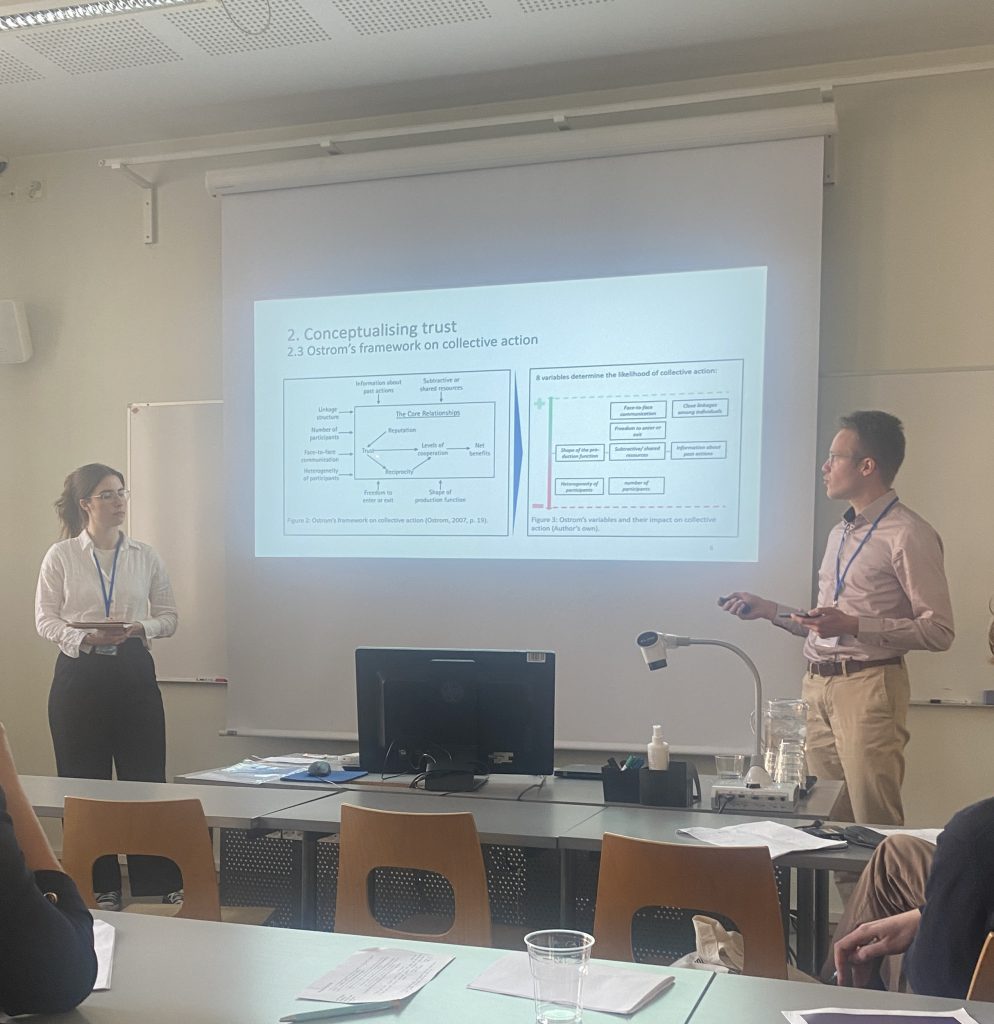
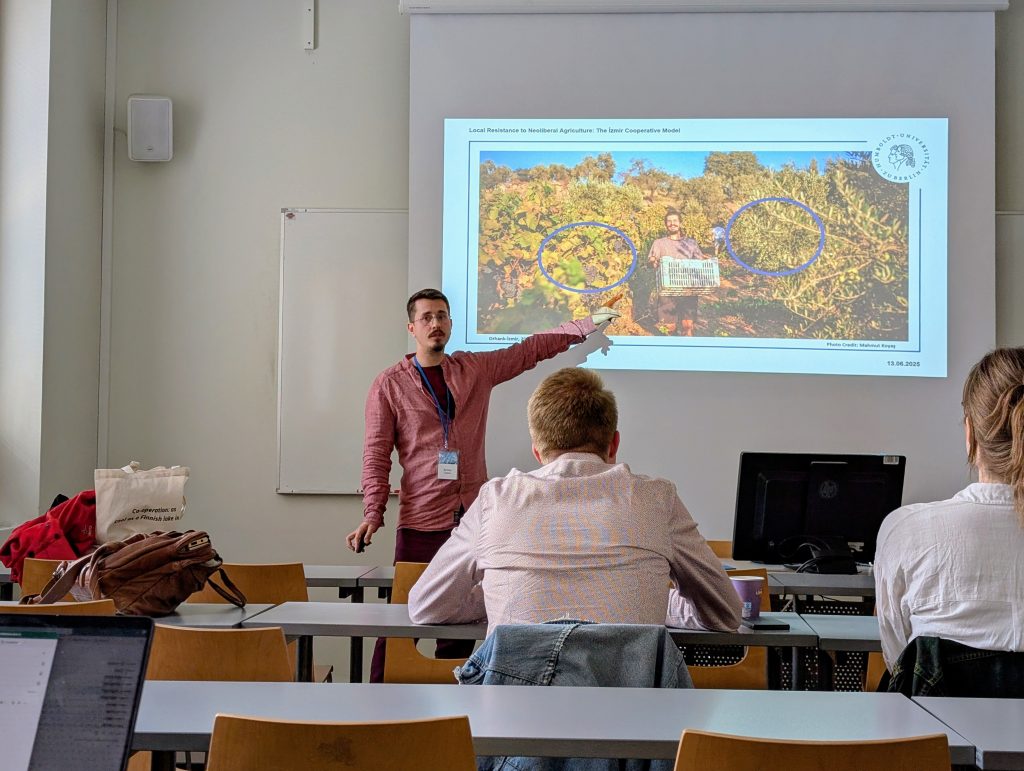
Aiming at introducing students to a broader academic community, the Berlin Institute for Cooperative Studies financially supported the participation of Delia Scheel, Benedikt Hoppe and Berkay Üstün to the ICA CCR Research Conference 2025 to present their paper originally conceived and written for the Master Course on Cooperation and Cooperatives at Humboldt Universität zu Berlin. They were all students of the Master’s degree Integrated Natural Resource Management at Humboldt-Universität zu Berlin. Here we share their impressions.
Delia Scheel was at the time of the ICA CCR Conference also working as a student assistant in scientific coordination at the Potsdam Institute for Climate Impact Research and Benedikt Hoppe is currently working as a scholar at the Zentrum für Agrarlandschaftsforschung in the field of local organic food value chains. Together, they wrote a research paper investigating the determinants of trust in agricultural cooperatives by conducting a systematic literature review of empirical studies, focusing on OECD countries. They found that several trust determinants are related to the cooperative’s members, the leadership’s actions and the structure of the co-operative. Drawing also from existing theoretical frameworks which propose trust determinants, the authors created their own Model of Trust in Agricultural Cooperatives.
For Benedikt, “being at the ICA CCR Conference I could gain first-hand experience in presenting a scientific paper and afterwards dealing also with in depth questions and feedback from other the audience. It was really inspiring how all attendees were open to exchange ideas and some even offering support with respect to our research. Besides the fruitful academic exchange, I was also able to set up personal links with other attendees by discovering together the many activities and beautiful sites Helsinki offers.”
For Delia, “the ICA CCR Conference in Helsinki was my first time attending a research conference. The presentation was a great exercise and the feedback we received afterwards from the audience was helpful to identify room for improvement in our paper. Visiting the presentations of other participants allowed me to get a better insight into what presentations at research conferences can look like. It was also very rewarding to witness the co-operative spirit at the conference because being there felt like being part of a community. I was able to connect with people from science and practice coming from many different countries, which enabled me to learn about co-operatives in a way that wouldn’t have been possible otherwise.”
Berkay Üstün, also a student assistant for climate protection projects at atmosfair gGmbH, did research on the role and development of agricultural cooperatives in Turkey. More specifically, Berkay coined the concept of the İzmir Cooperative Model, exploring the public policies implemented by the İzmir Metropolitan Municipality in cooperation with local agricultural cooperatives. His findings revealed that the İzmir Cooperative Model plays a protective role for smallholder farmers by leveraging the potential of cooperatives as instruments of local resilience against neoliberal agricultural dynamics.
For Berkay, “the ICA CCR Conference in Helsinki was my first experience presenting at an academic conference. I truly enjoyed being part of a wider academic community and meeting researchers and professors from around the world. The discussions following my presentation were engaging and motivating, providing me with valuable perspectives on my topic. Beyond the academic exchange, I appreciated the sense of openness and solidarity among participants, which made the experience both intellectually stimulating and personally rewarding.”