
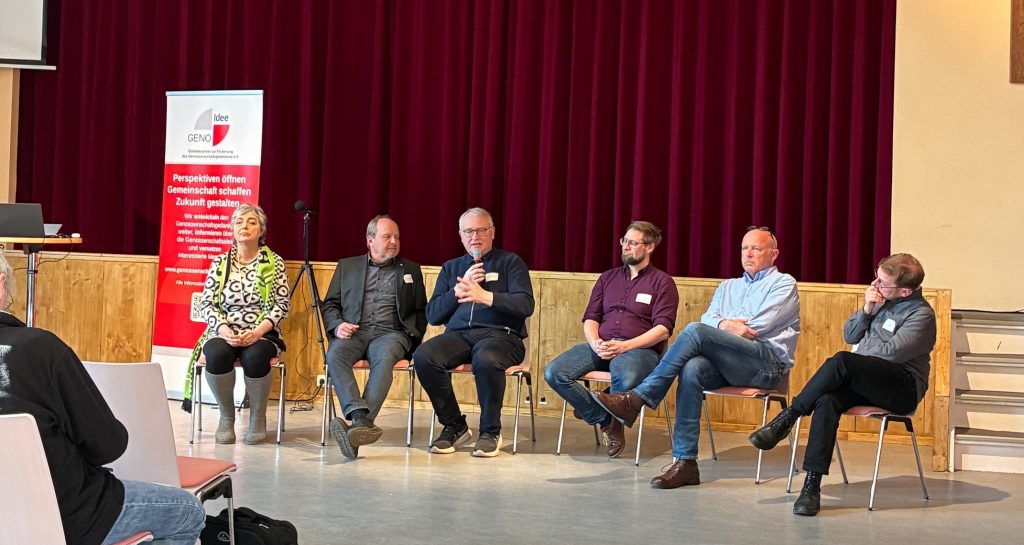
On 19 March 2026, the BzFdG — Germany’s national association for the promotion of the co-operative idea — marked its 40th anniversary with a day-long conference in Berlin. The event brought together politicians, academics, practitioners, and advocates to reflect on the past four decades and look ahead to the future of co-operative organisation in Germany and beyond.
The programme opened with reflections from Jan Kuhnert, chair of BzFdG, and former president Dr. Christoph Zöpel, followed by a historical perspective from Dr. Burghard Flieger on the association’s role as an incubator for innovation. A midday panel on the political significance of the co-operative idea featured representatives from different political parties. The afternoon concluded with a fishbowl discussion on the conditions needed for co-operatives to thrive in the coming decades, and a look ahead to BzFdG’s future direction.
Prof. Dr. Markus Hanisch opened his contribution by naming the structural challenges that define the present moment. The generational contract — the social compact through which each generation supports the previous one in old age — is under strain in an ageing society where trust in public institutions is declining. Young families increasingly cannot afford property. Energy and water supply face questions of long-term security and equitable access. Inflation and economic volatility have eroded purchasing power across household budgets.
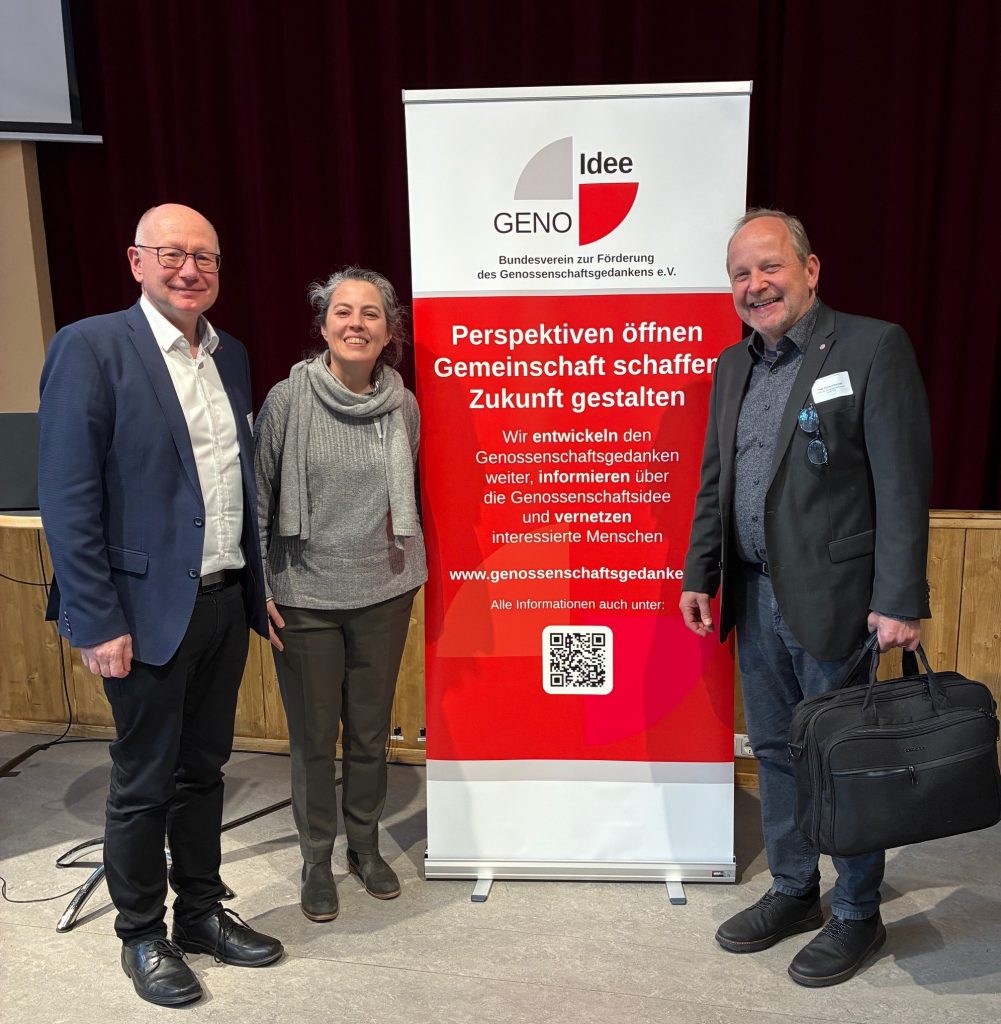
In a world of instability, the co-operative model is not a utopian aspiration — it is a practical necessity.
Against this backdrop, Hanisch outlined the visions he sees as widely shared: decent and flexible work, genuinely human-centred care systems for an ageing population, stable prices for essential goods and services, and an economy that remains viable for small and medium-sized enterprises. These are not radical demands, he argued — they are baseline expectations that current systems are failing to meet.
The second half of the talk turned to design principles. Hanisch drew a distinction between mere coordination — managing competing interests from the outside — and genuine co-operation, which requires shared purpose, trust, and mutual commitment. He proposed that co-operative institutions have a distinctive capacity to bridge the gap between state provision and market supply, particularly in the delivery of essential services such as energy, housing, and care.
Crucially, Hanisch argued that the co-operative idea is already deeply embedded in German society, often without carrying the label. Housing initiatives, energy communities, solidarity networks, and care collectives all embody co-operative values — self-help, self-governance, and collective accountability — whether or not they formally register as co-operatives. The task for the co-operative movement is to recognise and strengthen these expressions wherever they emerge, and to avoid institutional rigidity that would prevent adaptation to new sectors and new forms of membership.