Master Course “Co-operation and Co-operative Organizations”
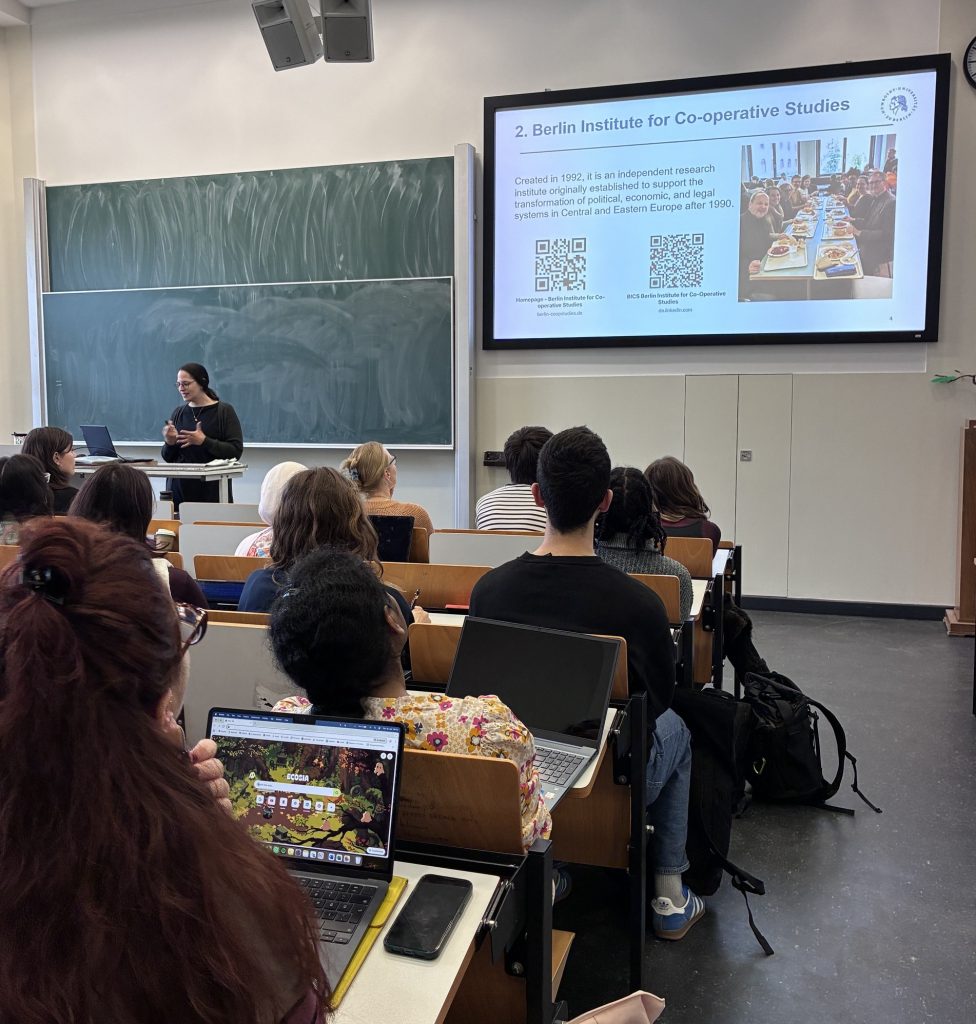
Since 2007, the course is offered for students of the master programs such as Agricultural Economics, Rural Development, and Integrated Natural Resource Management at Humboldt University. In 2016, the lecture was restructured and updated. Due to the Covid-19 Pandemic, the course was adapted to a digital format as of 2020. Since 2024, the course includes fields visits as parts of its active learning strategies.
This course is designed to introduce students to the cooperative business model and to encourage them to think critically about why cooperatives emerge, the ways in which they differ from other forms of enterprise, and how the model can be used to address current social and economic issues.
The course uses different theoretical strands such as collective action, behavioural economics, industrial organisation, rural innovation, and development economics, using examples to illustrate concepts and ideas. It also analyses cooperatives as strategies towards poverty alleviation and rural development.

Examples of Content and Guest Lecturers (See below for a detailed overview):
Cooperation as a Pattern of (Human) Behaviour
The Cooperative Model
Governance in the Cooperative
The Cooperative and the Market
The cooperative from a value chain perspective
Cooperatives and the agroecological transition
Policies and Enabling Environments for Cooperative Development
Cooperatives as (rural) catalysts for change?
Farmer Organisations in Transition and Developing Economies
Lecturers: Prof. Dr. Markus Hanisch, Prof. Dr. Marcel Robischon, Dr. Agustina Malvido and Dr. Katrin Martens
Guest Lecturers:
Prof. Dr. Jos Bijman
Benjamin Dannemann
Dr. Véronique De Herde
Prof. Dr. Seungkwon Jang
Dr. Margitta Minah
Aicha Mechri
Methods: Lectures and seminars, exercises, group works, literature analysis, field visits, research proposal writing, oral presentation, scientific paper writing.
Course structure and development in 2026
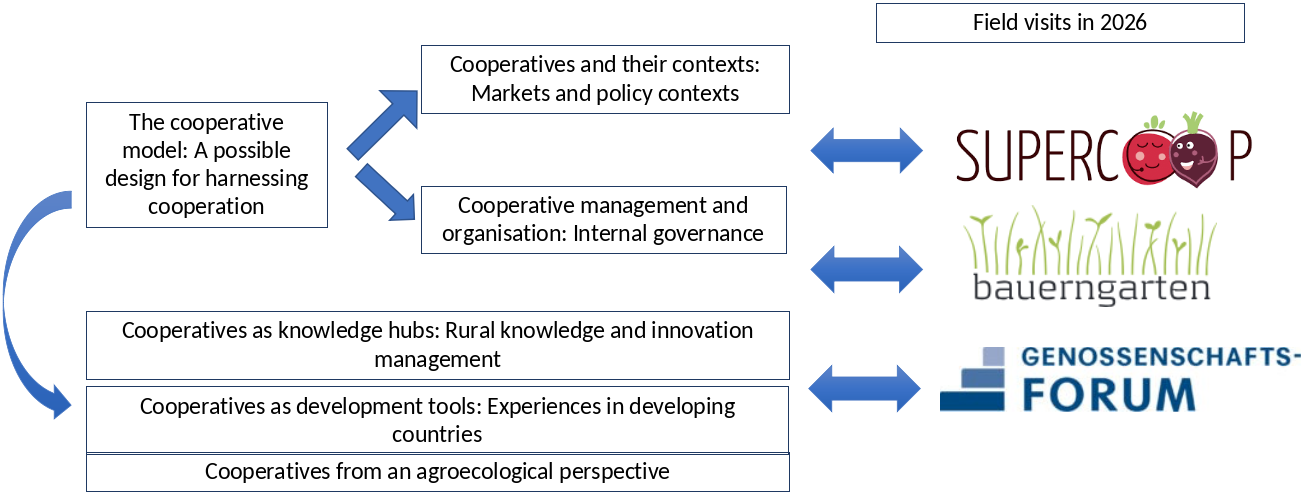
In 2026, the course interlinked different conceptual topics with field visits. Moreover, during the semester, students went through a research cycle: they wrote a research proposal, exchanged peer feedback, and delivered an oral presentation.
Course structure and syllabus 2026
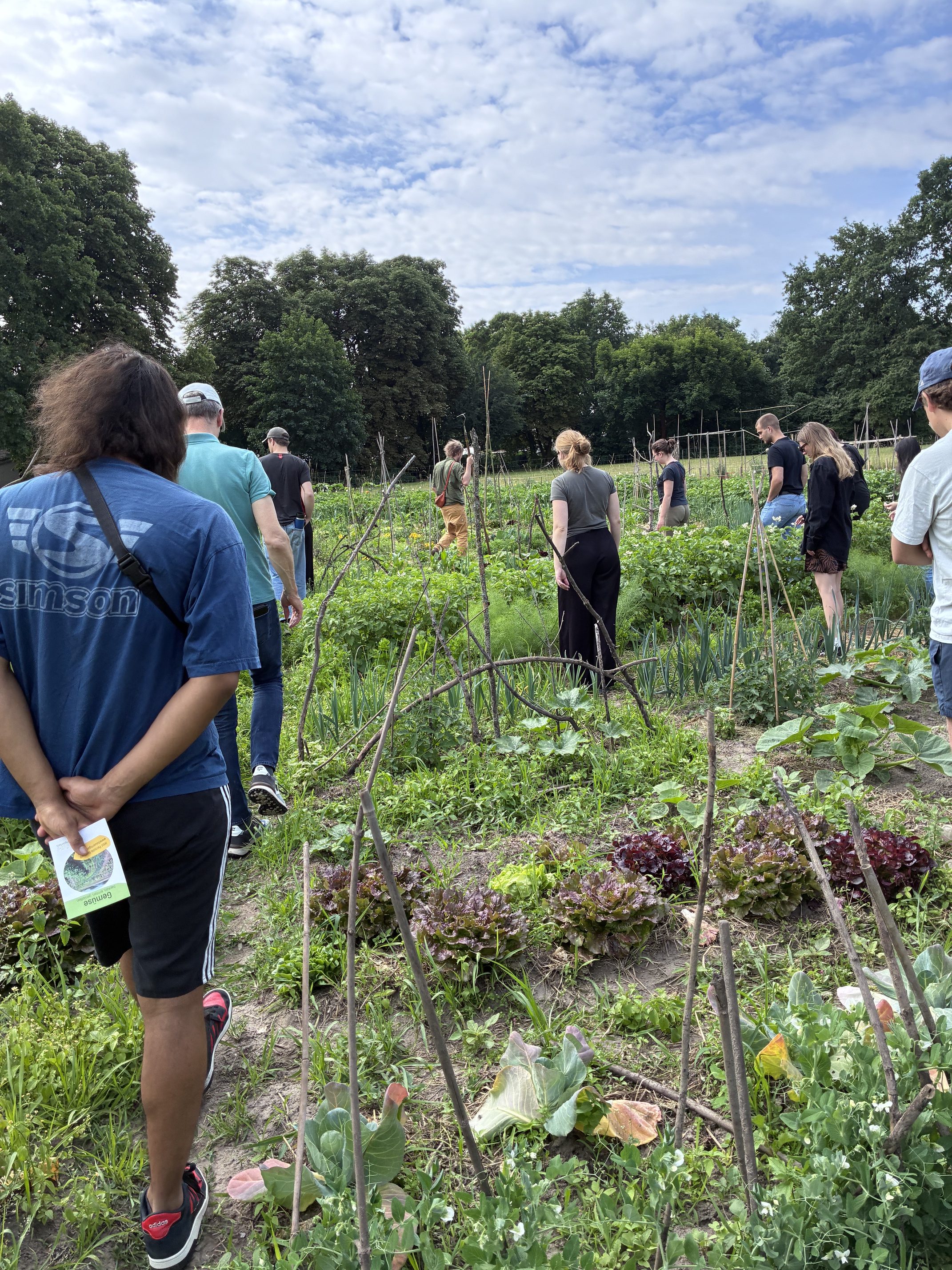
In 2026, the field visits included the SuperCoop e.G, Bauerngarten and the Genossenschaftsforum
Bauerngarten operates self-harvest vegetable plots on farmland in three different locations around Berlin. They use the Viennese Gemüseselbsternte model: the farm pre-plants circular parcels with some 25 organic crops, and members tend and harvest them over one season. It was run as a single-owner firm but recently the business has been transferred to a newly founded cooperative, bauerngarten eG, which will take over operations from 2027.
SuperCoop Berlin eG is a cooperative supermarket opened in September 2021 and modelled on the Park Slope Food Coop in New York and La Louve in Paris. Its roughly 2,000 members can shop a wide variety of food related items,
they contribute about three hours of work per month, and decide on assortment and policy under a one-member-one-vote rule.
Genossenschaftsforum e.V. is a non-profit association founded at the beginning of the 90s by twelve Berlin housing cooperatives and now comprising around 55 housing cooperatives from Berlin and Potsdam. It promotes the cooperative idea through publications, events and networking, and since 2021 runs the cooperativ Werkraum, a permanent exhibition and event space on the history of housing cooperatives in Berlin and Potsdam.
Benjamin Dannemann from DGRV Energy gave a lecture on cooperatives in the energy sector in Germany, highlighting different cooperative organisational models.